


Improving mobile coverage: Challenges and solutions
In today's business environment, reliable wireless connectivity and robust mobile coverage is an essential requirement for enterprises. Although communication technologies have evolved rapidly, the reality is that issues such as building architecture (thick walls, metal structures, insulating glass, etc.) or the reduction of outdoor antennas by operators, hinder normal signal reception inside many corporate facilities.
In this article we address the main technical challenges and explain the most effective solutions for improving mobile coverage in enterprises, ensuring stable communications.

When can mobile coverage in companies be improved?
Architectural obstacles (walls, ceilings, columns, insulating materials) attenuate or block radio waves. For example, concrete and metal can significantly reduce signal strength, causing dead zones indoors. In industrial environments, machinery and metal shelves can generate interference and coverage shadows. On the other hand, the high density of connected devices in modern offices saturates the radio spectrum, causing interference between nearby networks. In other cases, certain structures (such as basements or subway parking lots) are naturally isolated from the outside signal.
Before considering a solution, it is important to check a basic requirement in the case of mobile coverage: to have a minimum signal outside the building. In order to improve the internal mobile coverage, there must be at least a decent reception outside (e.g. a couple of coverage bars on the roof or facades). From that signal, it is possible to amplify and distribute it inside using suitable equipment. If no signal from any operator reaches the outside at all, more complex solutions would have to be explored, but typically there is always some usable outdoor coverage even in difficult areas.
Types of solutions to improve mobile coverage
There are two main approaches to solving mobile coverage problems:
1. Solutions offered by operators
They can install signal repeater systems within the customer's premises, in the form of microcells or dedicated amplifiers. However, they have limitations:
- High cost: they usually entail a significant investment, sometimes only affordable for large customers, as they involve proprietary equipment and specific agreements.
- Restricted compatibility: these repeaters installed by a carrier only work for that carrier's network. Therefore, they improve coverage only for that carrier.
This restriction is a problem in areas with a high turnover of users or visitors - such as business centers, hotels, restaurants, shopping malls or gyms - where employees and customers use different mobile operators. For example, providing a business center with Movistar-only coverage would leave users of Orange, Vodafone, etc. without service.
Implementing multiple carrier systems (one for each company) is unfeasible due to cost and complexity. In short, carrier solutions solve the coverage of a single network, but do not guarantee universal service for all users.
2. Third-party solutions compatible with all operators
A more flexible and efficient alternative is to opt for neutral solutions provided by specialized integrators, which amplify and distribute the signal of multiple operators at the same time. All carriers are covered simultaneously.
This is possible thanks to equipment that captures the different frequency bands used by each operator and amplifies them within the building regardless of which network the original signal comes from. Given that in a typical company there are employees and visitors with different mobile carriers, this option ensures a homogeneous connectivity experience.
In addition, third-party solutions are usually more scalable and customizable. It is important to note that, in Spain, these repeaters must be approved and comply with regulations (CE marking, ETSI standards) and their installation must be carried out by professionals. The use of amplifiers that are not approved or installed without permission may cause interference in the public network and may result in penalties.
How are these solutions deployed?
The process of implementing a professional coverage improvement solution requires a detailed technical study:
Signal measurement and analysis
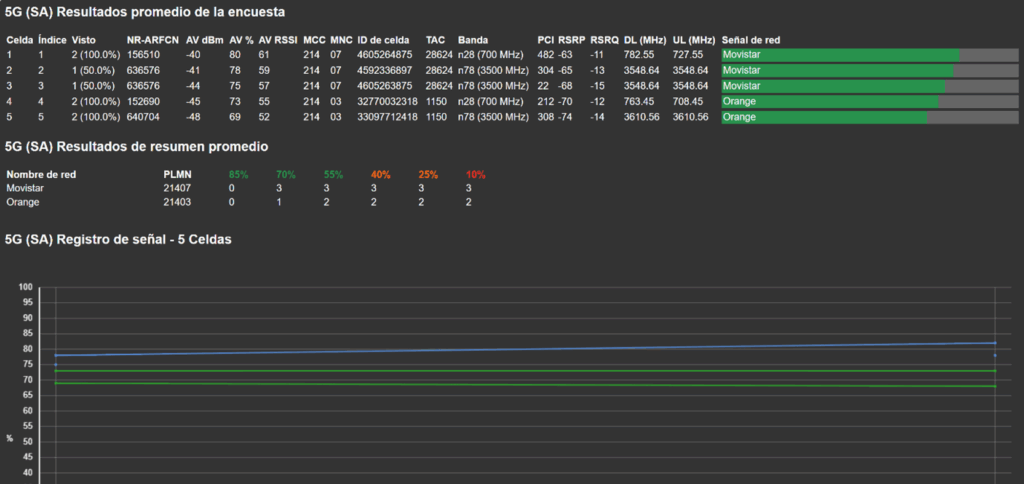
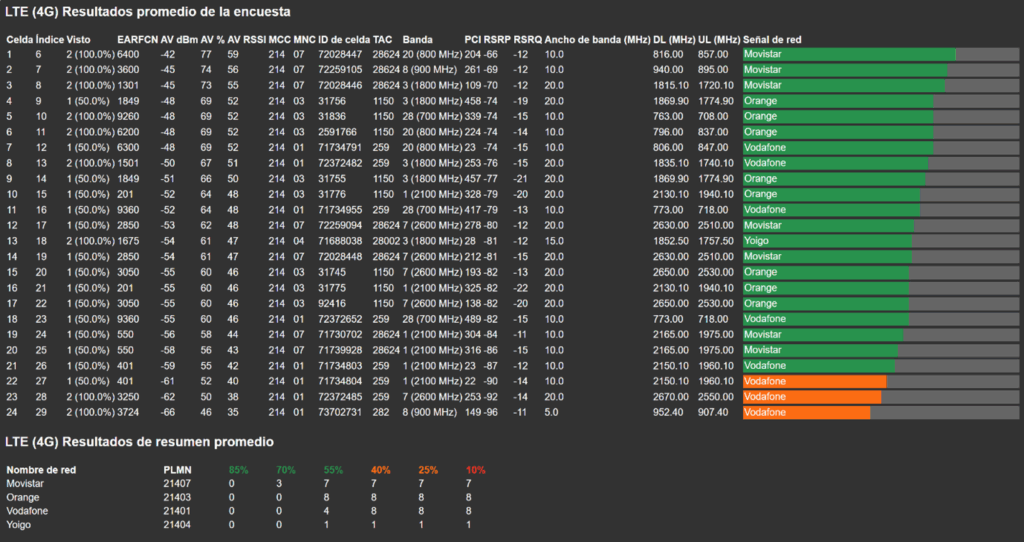
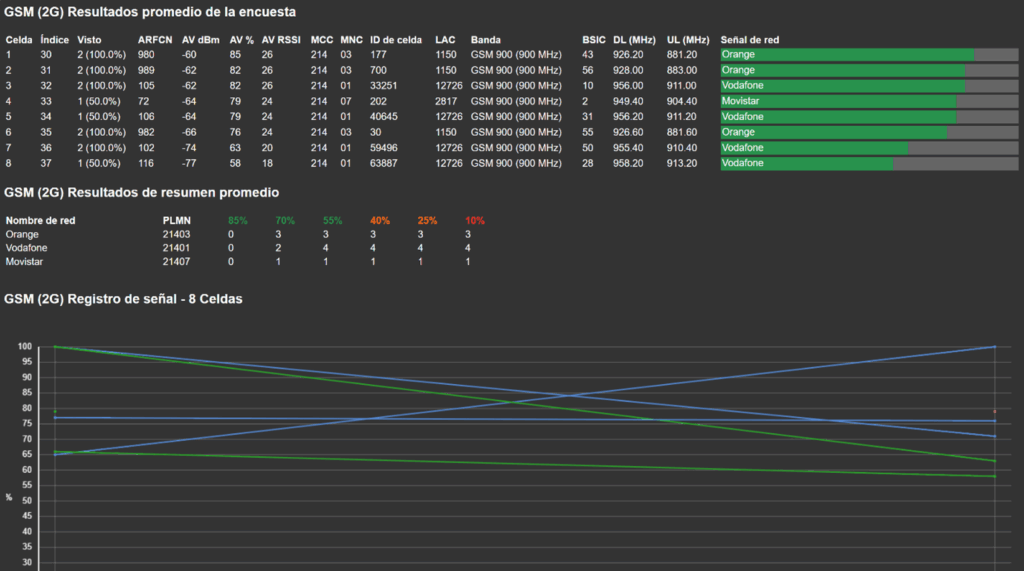
Specialized equipment - such as a spectrum analyzer - is used to analyze the power and quality of the mobile signal available at different points. The main objective is to identify the best location and orientation for the outdoor receiver. This phase is critical to ensure good signal reception from all operators present.
In addition, architectural features are taken into account: building plans, construction materials, space distribution, even decoration, as they will influence wave propagation.
The results are then analyzed to determine the location of the antenna.
Interior display design
Once the optimal location for the receiver has been identified, the indoor coverage plan is designed. It must be defined:
- Areas to be covered.
- Number and type of indoor antennas required.
- Wiring length.
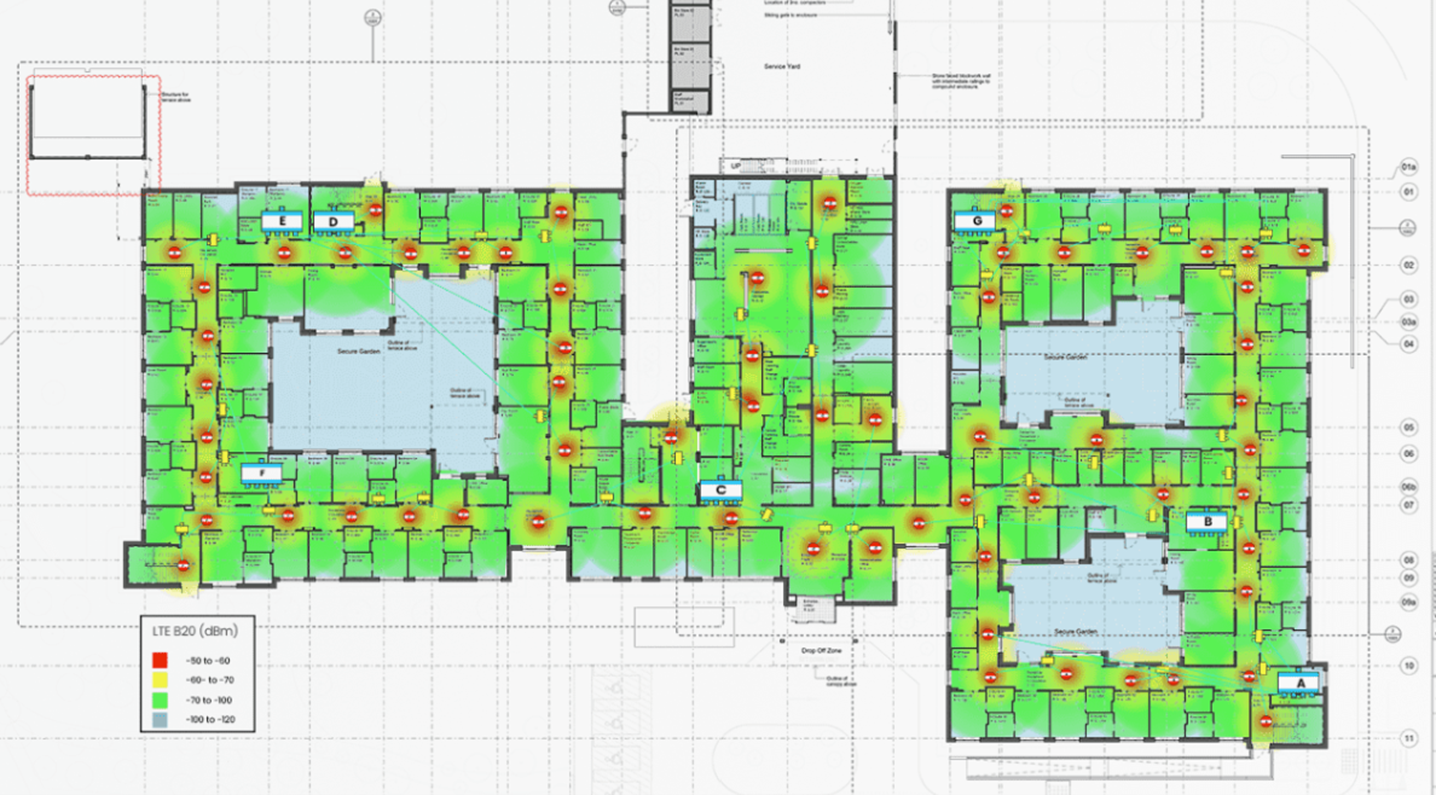
Simulation programs can be used to generate a heat map of expected coverage, indicating what signal strength will be available in each corner with the proposed antenna arrangement. This allows to verify that there are no uncovered areas and to adjust the antenna position virtually before installation. It also helps to accurately calculate the materials and resources required, estimating the final performance.
Choice and distribution of equipment
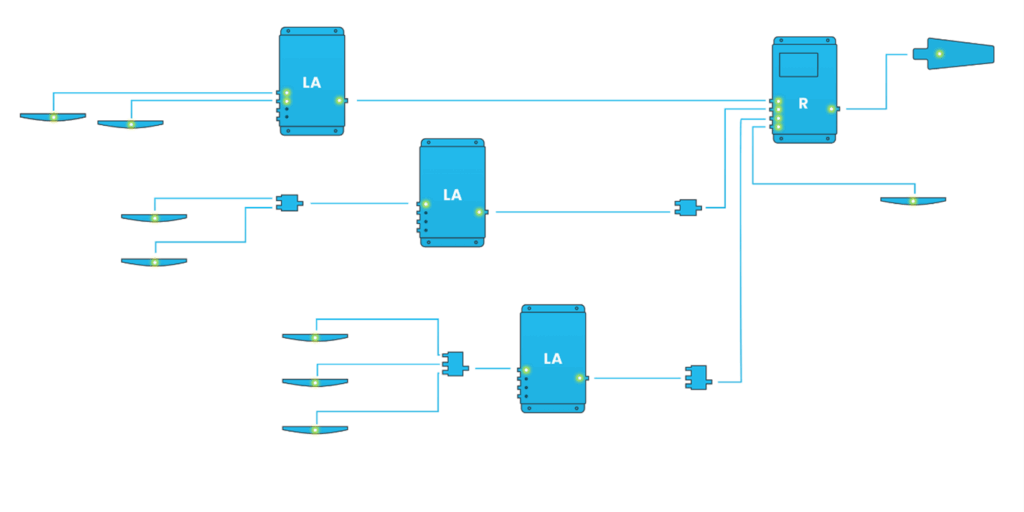
Each signal repeater can connect up to 4 indoor antennas with a maximum length of 35 meters per cable. Using splitters, it is possible to feed two antennas per port, but the maximum distance is reduced to 20 meters with low loss cabling.
Depending on the type of space, they are chosen:
- Omnidirectional antennas: cover a radius of 7.5 m (in open spaces).
- Directional antennas: coverage up to 15×15 m in front of the antenna.
Architectural barriers can attenuate the signal, so specific tools are used to simulate the signal behavior according to the building structure.
Deployment in large installations
What happens if the area to be covered is very large or with many nooks and crannies, exceeding the capacity of a single repeater and 4-8 indoor antennas? This is the case for large installations such as multi-story office buildings, hospitals, convention centers or large industrial plants. In such situations, the system can be scaled up by adding additional components.
It is possible to incorporate intermediate signal boosters. These are cascaded from the main repeater and offer 4 antenna ports with the same specifications as the repeaters. The distance between the repeater and the amplifier can be up to 90 meters, allowing for extended coverage in larger installations.
How are these solutions deployed?
Wireless networks require some ongoing attention to function optimally, so it is advisable to have a professional maintenance and support plan in place:
- Preventive maintenance: Periodic reviews of all components. In the case of repeaters and signal boosters, check that gain levels remain stable, clean filters if any, and physically check the condition of the antennas (for example, an outdoor antenna may become misaligned in strong winds or accumulate dirt).
- Corrective maintenance: In the event of incidents, the support team must act quickly. In solutions contracted with companies such as Smartgroup, a technical assistance service is usually included to which the client can resort. Having redundant or spare devices is part of the best practices in critical environments.
- Monitoring and alerts: Some installations incorporate remote monitoring systems. For example, there are advanced cellular repeaters that connect to the Internet to report their status to a platform.
Another important aspect is technological evolution. Solutions deployed today must be prepared for the long term. A good provider will plan to leave room for new frequencies or standards.
Conclusion
Improving mobile coverage in enterprise environments is a technical challenge, but with a detailed analysis and the right choice of equipment and design, it is possible to achieve an efficient, stable solution adapted to any corporate environment.
Each project requires a tailor-made suit: from understanding the specifics of the building (signal challenges, interference) to designing and installing a system that ensures users can communicate and connect without obstacles, whether they are in a glass office in the city or in an industrial building in the suburbs.
At Smartgroup we have the experience and specialization to carry out this type of integral deployments. Our technical team performs on-site studies, simulations and customized configurations for different sectors, ensuring optimal results. We also offer professional installation with quality approved devices and continuous post-deployment support so that your company always has the best possible wireless connectivity.
Contact us to request your personalized quote with no obligation. And follow us on LinkedIn to keep up to date with all the latest news.
